
The Web Was Built For Humans. The Next Web Is Built For Agents.
For the last 20+ years, we typed queries, clicked links, opened tabs, and did all the hard work ourselves. Now, for the first time, we’re sending AI agents to do it for us.

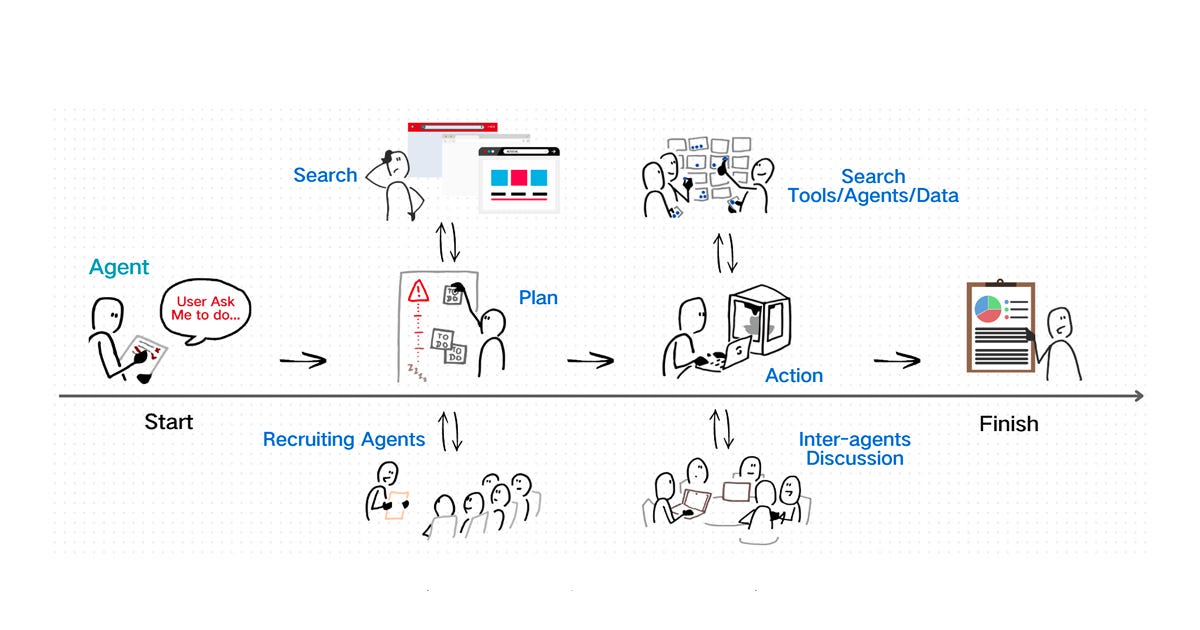
Image credit: Agentic Web Paper
What’s changing
For the last two decades, we saw that the internet worked this way: humans asked, humans searched, and humans decided.
We went to Google, typed a keyword, got “10 blue links,” opened a bunch of tabs, filtered information, and finally made a decision. It was messy and manual, but we were in control.
That world is disappearing much faster than most small businesses and individuals realize. Today, we tell an AI agent the outcome we want, and it goes out to search, compare, summarize, and even execute tasks on our behalf. We review the final result, maybe tweak it a bit, and press approve.
This isn’t just my intuition.
Cloudflare sits in front of a huge portion of the internet, so they see traffic at vast scale. When they say:
AI bots accounted for 4.2% of all HTML requests

Which included:
User-action agents: bots acting on behalf of users
Search crawlers: AI-powered search and answer engines. (Google bot is not included here. It itself accounted for 4.5% request )
It means that out of every 100 times a web page’s HTML was requested, about 4 of those requests came from AI systems, not humans.
4.2% may sound small. But it’s just the beginning.
Goldman Sachs estimates:
The application software market could grow to $780 billion by 2030. And AI Agents could represent over 60% of software spend by 2030. New software value coming from AI agents that actually execute work instead of simple chatbots.
Source.
It’s clear that the web is shifting from “humans using browser & software” to “humans sending agents.” And almost everything about how we build products, publish content, and get discovered will be forced to change.
What breaks if we don’t adapt
This is a massive problem hiding in plain sight.
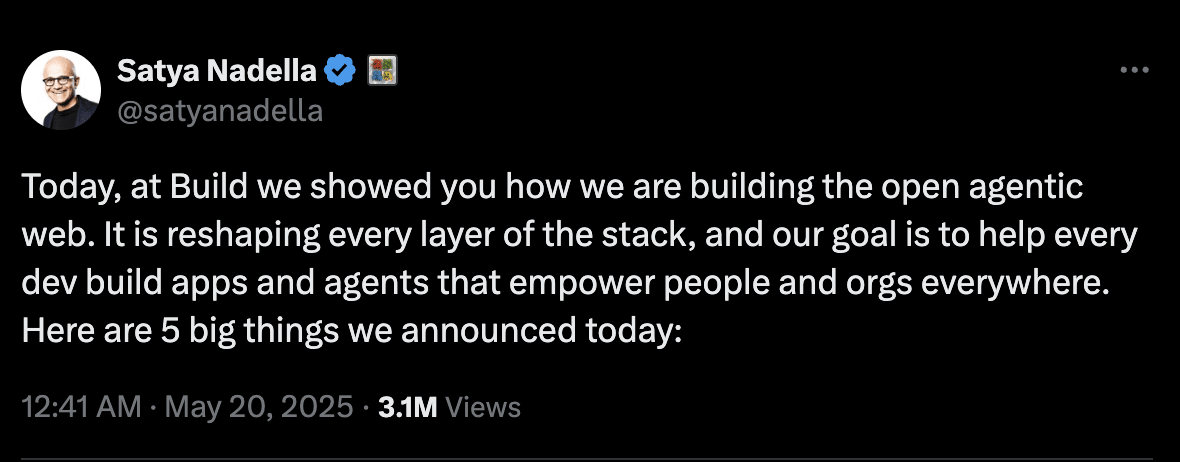
Most of the web was designed for human eyeballs, not AI agents. Interfaces, copy, funnels, and even SEO strategies assume a person is clicking, scrolling, and thinking. Meanwhile, the largest tech companies in the world are quietly rebuilding the infrastructure of the web so it works just as well for agents as it does for humans. If you notice carefully, their new products, protocols, and platforms are all moving in this direction.
Small businesses are not ready for this.
Most current websites and apps will become invisible to agents.
Many of today’s “discovery” channels will stop working as agents bypass traditional search and social patterns.
A huge number of everyday “tasks” will be automated away, making some skills obsolete and increasing the value of others.
If you keep building only for humans in a world where agents do the heavy lifting, your product, your marketing, and even your career can quietly become obsolete. By the time it’s obvious, it will be late.
The agentic web
It’s the web where humans and AI agents work together: humans set intent and outcomes, agents do most of the execution, and systems are designed to be legible and actionable to both.
In the agentic web:
Products are designed so agents can understand, test, and use them.
Online presence is structured so agents can discover, trust, verify, and recommend you.
Individuals shape their careers around high‑leverage skills that sit on top of automation rather than compete with it.
I don’t have all the answers yet on how to do it. I’m early in this journey, learning in public, and making mistakes in real time. But I’m convinced of one thing: ignoring this shift is riskier than leaning into it.
Why listen to me?
I’ve been in a web and software development company for the last five years. I am responsible for bringing users in, converting them, and shaping products as a product manager. I’ve been watching, up close, how fast this transition is happening.
By the way, I’m not a native English speaker. I know, my writing has mistakes, my style is not “perfect,” and none of this will be polished at the beginning. But I will try my best to keep it well researched, honest, and written by me. Not generated by AI. Yeah, I’ll use AI for research, but the final post will be written by me.
In a sea of low‑effort AI content, I believe people still feel and value human, opinionated, hard‑earned insight.
This newsletter, my YouTube channel, and my social feeds will become a small strategic content ecosystem: one place where I explore the agentic web in depth each week, then break it down into more accessible formats for you.
A concrete invitation
Here’s what I’m committing to:
I’ll publish a new issue every Friday. All about the agentic web, deeply explored, written by me.
I’ll spend the week exploring, experimenting, and talking to people, then a full day writing and editing.
I’ll share news, my takeaways, experiments, and playbooks to make your online presence “human + AI ready,” and to help individuals pick and learn the skills that will matter in an agentic web.
If you’re a small business, this newsletter will help you rethink:
Your products and services for a world where agents are your new users.
Your acquisition channels when search and social are mediated by AI.
Your operations so you can automate low‑value work and focus humans on what really matters.
If you’re an individual, it will help you:
See which skills are fading and which are rising.
Choose where to upskill so you don’t get left behind.
Build a personal system to stay valuable as more of your current tasks become automated.
I’m starting this journey from curiosity, not perfection. I know a little, I’m trying to learn fast, and I want you to learn with me.
If you don’t want to be surprised by the next wave of change, but instead ride it, subscribe now.
I’ll meet you in your inbox every Friday.
- Farhad